
If your home is warmed by a pellet stove, you know that the fuel you choose is as important as the appliance itself. Unlike a traditional wood fireplace that burns cordwood, a pellet stove is engineered to burn small, highly compressed pellets efficiently. Choosing the right pellet type directly impacts the heat output (measured in BTUs), ash production, and maintenance of your unit. At Haven Spa, Pool & Hearth, serving Clackamas, Beaverton, Salem, and Vancouver, we help you understand the nuances of this fuel to maximize the performance of your indoor fireplace. Get started today.
Decoding Softwood vs. Hardwood Pellets
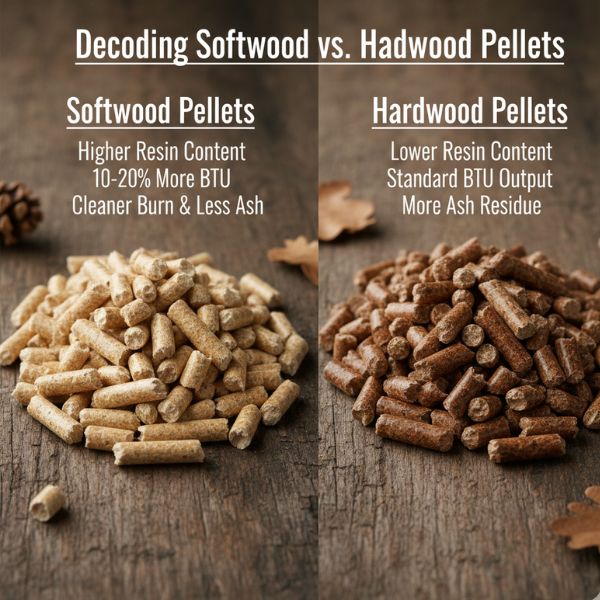
Many assume hardwood pellets burn hotter, just like hardwood logs. However, the compression process for pellets equalizes the density. Where they differ is in resin content. Softwood pellets (made from woods like pine or spruce) contain natural resins (lignins) that have a higher caloric value. This means softwood pellets often provide 10% to 20% more BTU (British Thermal Unit) output per pound and tend to burn cleaner with lower ash residue than hardwood pellets, despite the popular misconception.
The Critical Factor: Ash and Maintenance
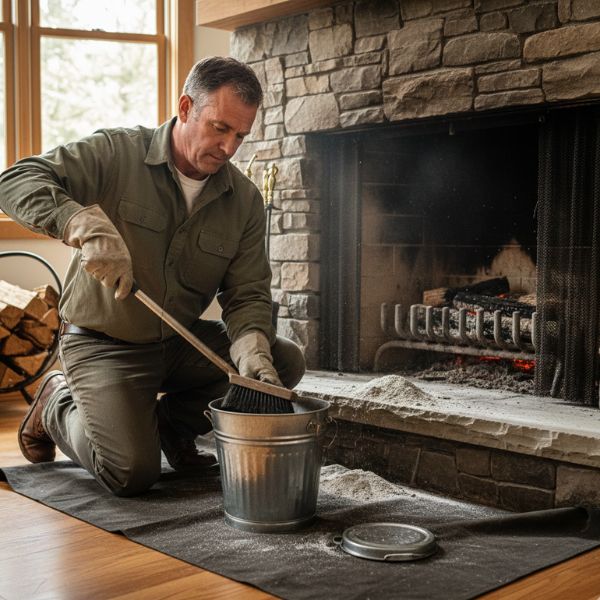
Beyond raw heat output, you must consider ash content. A high-quality pellet, regardless of whether it’s softwood or hardwood, should have an ash content of 1% or less. High ash content means you have to clean your pellet stove more frequently, and excessive ash can impede airflow, ultimately decreasing efficiency and heat output. Look for “Premium” or “Super Premium” pellets, as their manufacturing process typically results in cleaner materials (less bark, debris) and therefore lower ash—a key consideration for easy maintenance.
Specialty Blends and Performance
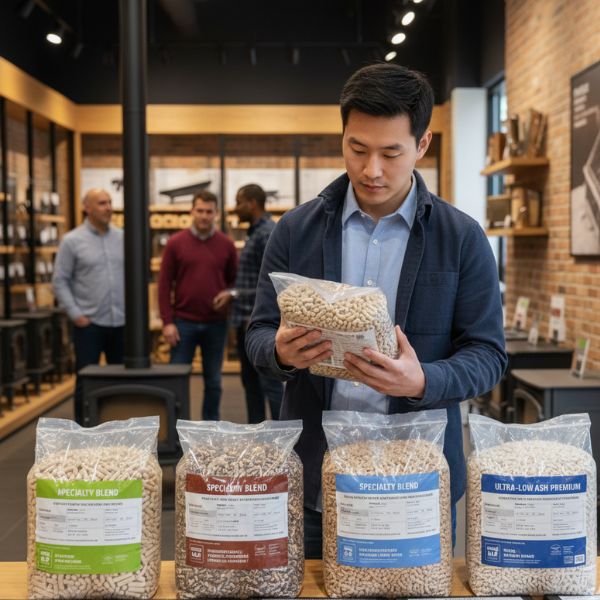
Specialty or blended pellets offer a middle ground, often combining two or more wood types (e.g., a mix of oak and pine). These blends are designed to balance burn time, heat output, and cost. While some blends aim for maximum heat, others focus on a longer, more consistent burn. Since pellet quality is highly dependent on the manufacturer’s process (drying, compression, and screening), the quality grade is often more important than the wood type. Always check the bag for BTU rating, moisture content (ideally below 8%), and ash content before stocking up.
GET STARTED TODAY
The “ultimate” pellet for your indoor fireplace depends on your stove model and priority: maximum BTUs for cold climates (lean toward high-quality softwood) or slightly longer burn times (some high-quality hardwood/blends). The most important takeaway is that pellet performance hinges on manufacturing quality, not just the wood source. Stop by one of Haven Spa. Pool & Hearth’s locations in Salem, Beaverton, Clackamas, and Vancouver today.